You probably already know that gut health matters. But here's something most people have never heard of: a specialized collection of gut bacteria that directly influences your estrogen levels. Scientists call it the estrobolome, and understanding how it works could change the way you think about everything from weight management to bone health, especially if you're over 40.
Key Takeaways
- The estrobolome is a group of gut bacteria that metabolize and recycle estrogen in your body, influencing how much active estrogen circulates in your blood.
- After 40, declining ovarian estrogen combined with reduced gut microbial diversity can create a "double hit" that accelerates metabolic and immune changes.
- Women naturally have greater gut microbial diversity than men, but this advantage narrows significantly after menopause.
- Supporting your gut microbiome through diet, fermented foods, and targeted probiotics may help maintain healthier estrogen metabolism during perimenopause and beyond.
What Is the Estrobolome?
The term "estrobolome" was introduced in 2012 by researchers Plottel and Blaser to describe the complete set of bacterial genes in the gut that are capable of metabolizing estrogens.1 It's not a single type of bacteria. It's a functional community, a collection of different species that share one important ability: they produce an enzyme called beta-glucuronidase.
Beta-glucuronidase is the key player here. When your liver processes estrogen for elimination, it attaches a chemical tag (glucuronic acid) that essentially deactivates the hormone and marks it for excretion through bile and stool. But beta-glucuronidase produced by your estrobolome bacteria can remove that tag, reactivating the estrogen and allowing it to be reabsorbed into your bloodstream.1
In a healthy gut with diverse, balanced bacteria, this recycling system works beautifully. The right amount of estrogen gets reactivated, the rest gets eliminated, and your circulating estrogen levels stay in a healthy range. When your gut microbiome is disrupted, though, this balance can shift in either direction, and that's where things get interesting.

How Your Gut Bacteria Recycle Estrogen
To understand the estrobolome, it helps to follow estrogen's journey through your body.
Your ovaries (and to a lesser extent, your adrenal glands and fat tissue) produce estrogen. This estrogen circulates through your blood, binding to receptors throughout your body to regulate everything from bone density to cardiovascular function to brain health. Eventually, your liver metabolizes it, conjugating it with glucuronic acid for elimination.
Here's where your gut bacteria enter the picture. The conjugated (deactivated) estrogen travels via bile into your intestines. If your estrobolome bacteria produce the right amount of beta-glucuronidase, a portion of that estrogen gets deconjugated, reactivated, and reabsorbed through your intestinal wall back into circulation.1
The key taxa involved in this process include species from the Lactobacillus, Bifidobacterium, Clostridium, and Bacteroides genera.1 If you recognize some of those names from probiotic labels, that's no coincidence. Many of the bacteria that support general gut health also contribute to healthy estrogen metabolism.
When the Balance Tips
Dysbiosis, an imbalance in your gut bacterial community, can disrupt this system in two ways:
Too little beta-glucuronidase activity means less estrogen gets reactivated. Combined with naturally declining ovarian production after 40, this compounds the drop in circulating estrogen. The result? Potentially more pronounced menopausal symptoms, accelerated bone loss, and metabolic shifts.2
Too much beta-glucuronidase activity means excess estrogen gets recycled back into circulation. This has been linked to estrogen-dependent conditions and is an active area of cancer research, though the clinical implications are still being mapped.1
The takeaway is that gut health isn't just about digestion. Your microbiome is actively participating in hormone regulation, and its influence becomes especially significant during the hormonal transitions of perimenopause and menopause.
Why This Matters More After 40
Research consistently shows that adult women have greater gut microbial diversity than men, with higher relative abundances of beneficial species like Akkermansia and Ruminococcus.3,4 This sex difference is minimal before puberty and appears to be driven primarily by sex hormones.
Here's the crucial finding: after menopause, women's microbiome composition begins to converge toward the male pattern.3 That greater diversity advantage that women carry through their reproductive years starts to narrow. And the timing could not be worse.
The Double Hit of Menopause
Declining estrogen doesn't just affect your reproductive system. It sets off a cascade that directly impacts your gut:
-
Reduced microbial diversity: Falling estrogen levels are associated with loss of beneficial Lactobacillus and Bifidobacterium species, the very bacteria that contribute to a healthy estrobolome.5
-
Enrichment of pro-inflammatory species: As beneficial bacteria decline, species associated with inflammation can gain a foothold.5
-
Disrupted gut barrier: Post-menopausal women show increased intestinal permeability (sometimes called "leaky gut"), allowing bacterial products to enter the bloodstream and trigger immune responses.6
-
Systemic inflammation: The combination of gut barrier disruption and immune activation contributes to low-grade chronic inflammation, which researchers call "inflammaging."7
A 2025 review in Frontiers in Endocrinology detailed how estrogen deficiency disrupts immune homeostasis through the NLRP3 and NF-kappaB signaling pathways, both of which are connected to gut barrier function.5 And a 2025 review in BioMedical Engineering OnLine linked this gut-immune-estrogen axis to increased risk of osteoporosis, cardiovascular disease, metabolic syndrome, and cognitive decline.6
This isn't about fear. It's about understanding that supporting your gut health during and after the menopausal transition has far-reaching consequences beyond digestion.
Restore Pillar
Support Your Microbiome Daily
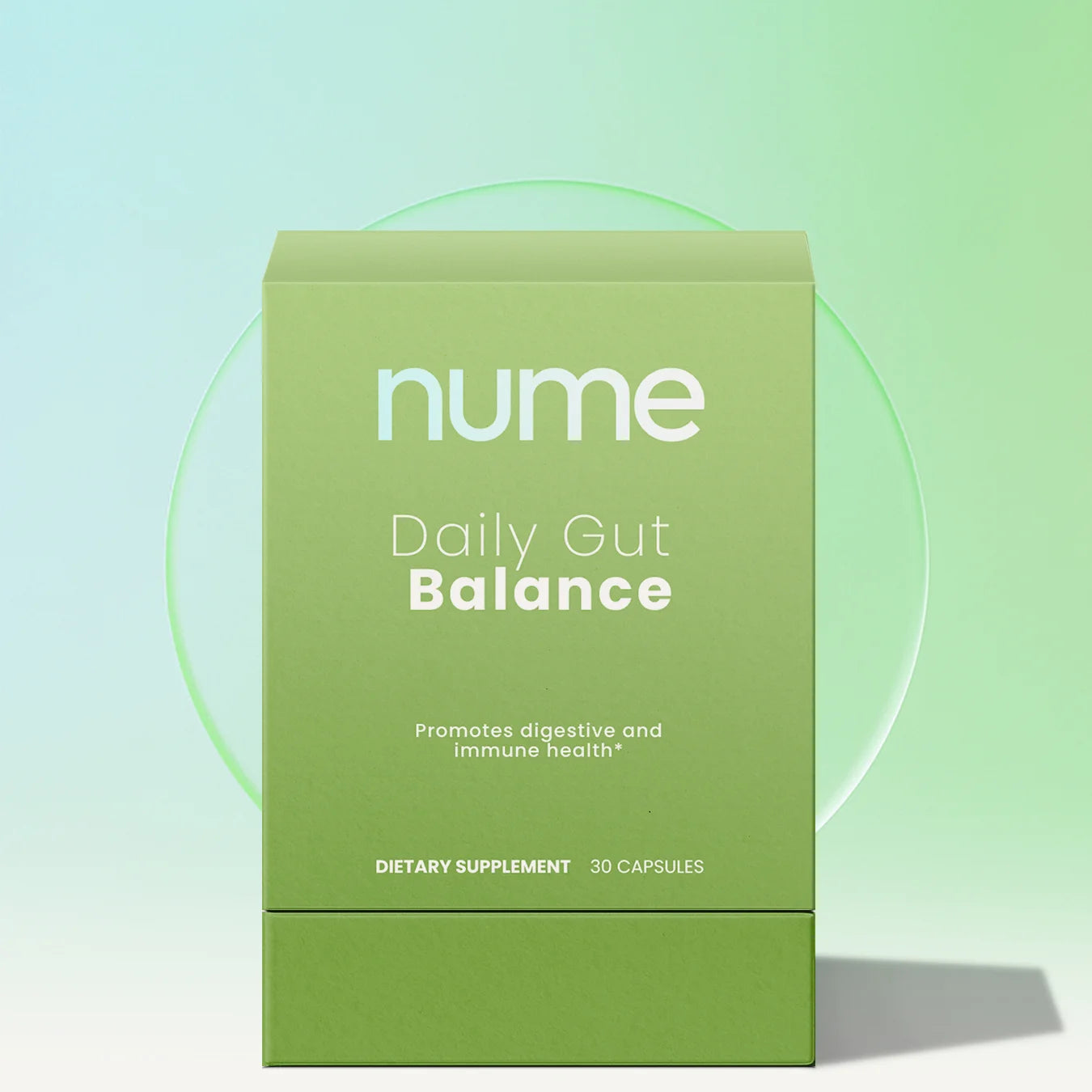
Daily Gut Balance delivers 20 billion CFU across 13 probiotic strains, including Lactobacillus and Bifidobacterium species that contribute to estrobolome function and gut microbial diversity.
Shop Now
Learn More

The Gut-Immune Connection That Changes With Age
Your gut isn't just processing food and recycling hormones. It's also home to roughly 70% of your immune system. The relationship between gut bacteria and immune function is bidirectional: your immune system shapes which bacteria thrive, and your bacteria shape how your immune system responds.7
A 2024 review in Biomedicines examined how age-related gut microbiome changes, combined with sex hormone decline, accelerate a process called immunosenescence, the gradual deterioration of immune function with age.7 The mechanism involves several interconnected pathways:
-
Short-chain fatty acids (SCFAs) produced by beneficial gut bacteria (particularly butyrate) maintain the gut barrier, feed intestinal cells, and regulate immune responses. When SCFA-producing bacteria decline, immune regulation weakens.8
-
Regulatory T-cells that prevent excessive immune activation depend on signals from a diverse gut microbiome. Reduced diversity means less immune tolerance and more inflammation.
-
Gut barrier integrity relies on a healthy bacterial community. When the barrier weakens, bacterial fragments (like lipopolysaccharides) cross into the bloodstream, triggering chronic low-level immune activation.
A 2023 multi-cohort analysis published in Gut Microbes found that the microbiome-health associations differ substantially by age bracket in women. What's protective at 30 may not be at 55, reinforcing the idea that gut health strategies may need to evolve as you move through different life stages.9
Early Evidence for Probiotic Support
Research specifically targeting the post-menopausal gut-immune axis is still in early stages, but some findings are encouraging. A 2024 prospective trial published in Nutrients followed 50 post-menopausal women (ages 45 to 65) taking a combination of L. plantarum PBS067, B. lactis BL050, and L. rhamnosus LRH020. After the intervention, the researchers observed significant reductions in inflammatory markers: IL-6 decreased by 87.8%, IL-1beta by 57.6%, and TNF-alpha by 40.8%.10
It's important to note that this was an observational study without a placebo control, so we should interpret the magnitude of these effects with caution. But the direction of the findings, specific probiotic strains reducing inflammatory markers in post-menopausal women, aligns with the broader mechanistic evidence.
What the research does not yet show is a direct clinical trial where probiotic supplementation measurably improved estrobolome function or circulating estrogen levels in humans. The concept is well-established, but the interventional evidence is still being built. That honesty matters: understanding where the science stands helps you make better decisions.
How to Support Your Estrobolome
While we wait for more targeted research, the good news is that the strategies that support overall gut microbial diversity also support estrobolome function. These aren't complicated, but consistency matters more than intensity.
1. Prioritize Dietary Fiber and Plant Diversity
Fiber is the primary fuel for your SCFA-producing gut bacteria. A diverse range of plant foods (vegetables, fruits, legumes, whole grains, nuts, seeds) feeds a diverse range of bacteria. Research suggests aiming for 30 or more different plant species per week, not per meal, to maximize microbial diversity.8
2. Include Fermented Foods Regularly
Fermented foods like yogurt, kefir, sauerkraut, kimchi, and miso introduce live bacteria and their metabolites into your gut. A 2021 Stanford study found that a high-fermented-food diet increased microbiome diversity and decreased inflammatory markers more effectively than a high-fiber diet alone over a 10-week period.
3. Consider Targeted Probiotic Support
If your diet is limited, if you've recently taken antibiotics, or if you're navigating perimenopause, a multi-strain probiotic can help maintain microbial diversity. Look for formulations that include Lactobacillus and Bifidobacterium species, the genera most consistently associated with estrobolome function and healthy gut immune signaling.1,10
4. Manage Stress and Prioritize Sleep
Chronic stress and poor sleep both reduce gut microbial diversity through cortisol-mediated pathways. Your gut bacteria have circadian rhythms too, and disrupting your sleep-wake cycle disrupts theirs. Even moderate sleep restriction (six hours or less consistently) has been associated with reduced beneficial bacterial populations.
5. Move Your Body
Regular moderate exercise is independently associated with greater gut microbial diversity. You don't need to run marathons. Walking, cycling, swimming, yoga, and strength training all count. The key is consistency over intensity.
6. Minimize Unnecessary Antibiotics and NSAIDs
Antibiotics can dramatically reduce gut diversity, sometimes for months. NSAIDs (like ibuprofen) can compromise gut barrier integrity with regular use. When these medications are necessary, they're necessary. But when they're optional, consider the downstream effects on your microbiome.
The Bottom Line
The estrobolome represents one of the most fascinating emerging areas in women's health science. Your gut bacteria aren't passive bystanders; they're actively participating in estrogen metabolism, immune regulation, and metabolic health. After 40, as ovarian estrogen production naturally declines and gut microbial diversity tends to decrease, supporting your microbiome becomes an increasingly meaningful investment in your overall wellbeing.
The science is clear on the mechanism: diverse, balanced gut bacteria support healthy estrogen recycling and immune function. The research on specific interventions, particularly probiotic strains that target estrobolome function, is still emerging. But the foundational strategies are solid: eat diverse plants, include fermented foods, manage stress, sleep well, move regularly, and consider a quality multi-strain probiotic to support microbial diversity.
This is the kind of health knowledge that empowers you to make informed choices. Not because someone told you to take a supplement, but because you understand what's happening in your own body and why it matters.
13 Probiotic Strains
Diversity Your Gut Can Feel
Daily Gut Balance includes L. plantarum, L. reuteri, B. lactis, and 10 more research-backed strains at 20 billion CFU. One capsule daily to support the microbial diversity your body relies on.
Shop Now
View All
Frequently Asked Questions
What exactly is the estrobolome?
The estrobolome is the collection of gut bacteria that produce beta-glucuronidase, an enzyme that reactivates estrogen in your intestines and allows it to be reabsorbed into your bloodstream. It was first described by researchers Plottel and Blaser in 2012, and it represents an important link between gut health and hormonal balance.
Can probiotics increase my estrogen levels?
There are currently no clinical trials directly demonstrating that probiotic supplementation increases circulating estrogen levels in humans. The estrobolome concept is well-established mechanistically, and probiotics do support the bacterial diversity needed for healthy estrogen metabolism, but this specific connection has not yet been proven in controlled human studies. Supporting gut health is valuable for many reasons; just be cautious about anyone claiming probiotics will "fix" hormonal balance.
Why does gut health decline after menopause?
Estrogen appears to play a protective role in maintaining gut microbial diversity. As estrogen levels fall during menopause, beneficial bacteria like Lactobacillus and Bifidobacterium decline, while pro-inflammatory species may increase. Post-menopausal women also show increased intestinal permeability. This creates a cycle: less estrogen means less microbial diversity, which means less estrobolome activity, which means even less estrogen gets recycled.
What probiotic strains are best for the estrobolome?
Research points to Lactobacillus and Bifidobacterium species as key contributors to estrobolome function. A 2024 study in post-menopausal women found significant reductions in inflammatory markers using a combination of L. plantarum, B. lactis, and L. rhamnosus. Multi-strain formulations that support overall microbial diversity are generally preferred over single-strain products, since the estrobolome is a community function rather than the job of one specific species.
Should I talk to my doctor about my estrobolome?
If you're experiencing significant menopausal symptoms, metabolic changes, or gut health concerns, it's always worth discussing with your healthcare provider. The estrobolome is a relatively new concept, and not all practitioners will be familiar with the term, but discussions about gut health, hormonal balance, and probiotic use are increasingly part of mainstream integrative medicine. Your doctor can help you understand whether targeted gut support makes sense alongside other treatments.
Sources
- Plottel CS, Blaser MJ. Microbiome and malignancy. Cell Host & Microbe. 2011;10(4):324-335. doi:10.1016/j.chom.2011.10.003
- Baker JM, Al-Nakkash L, Herbst-Kralovetz MM. Estrogen-gut microbiome axis: physiological and clinical implications. Maturitas. 2017;103:45-53. doi:10.1016/j.maturitas.2017.06.025
- Kim YS, Unno T, Kim BY, Park MS. Sex differences in gut microbiota. World Journal of Men's Health. 2020;38(1):48-60. Synthesized in reviews: mSystems (ASM, 2019) and American Journal of Physiology (2022).
- Org E, et al. Sex differences and hormonal effects on gut microbiota composition. mSystems. 2019. Multiple cohort analysis.
- Li Y, et al. Estrogen deficiency disrupts immune homeostasis through ERalpha/ERbeta/GPER-associated NLRP3/NF-kappaB signaling pathway. Frontiers in Endocrinology. 2025.
- 2025 review. Menopause, gut-immune-estrogen axis, and downstream risk of osteoporosis, CVD, metabolic syndrome, and cognitive decline. BioMedical Engineering OnLine. 2025.
- 2024 review. Age-related gut microbiome alterations and sex hormone decline accelerate immunosenescence. Biomedicines. 2024.
- Dalile B, Van Oudenhove L, Vervliet B, Verbeke K. The role of short-chain fatty acids in microbiota-gut-brain communication. Nature Reviews Gastroenterology & Hepatology. 2019;16(8):461-478.
- 2023 multi-cohort analysis. Microbiome-health associations differ by age bracket in women. Gut Microbes. 2023.
- 2024 prospective trial. L. plantarum PBS067, B. lactis BL050, L. rhamnosus LRH020 in 50 post-menopausal women aged 45-65: IL-6 decreased 87.8%, IL-1beta decreased 57.6%, TNF-alpha decreased 40.8%. Nutrients. 2024.